
Biltmore House has 255 rooms. Your ticket gets you into about 55 of them. It’s self-guided, with no add-on tour required — and that’s already a full day. This summer, House & Grounds admission starts at $80. Anyone 16 and under gets in free through Labor Day. That one detail alone can turn a $240 day for a family of three into $80. So no, you don’t need a splurge budget to do Biltmore right. You need a plan, comfortable shoes, and about four hours.
We spent a full day working through the house room by room. We went down into the basement, out through the gardens, and over to Antler Hill Village and the winery. Here’s what’s actually worth your time, what your ticket already includes, and where you can spend less.
The budget snapshot
Before you book, here’s what your admission actually covers. Biltmore folds a lot into one ticket:
- House & Grounds tickets start at $80 for the summer 2026 season. Buy online instead of at the gate, and you save $10 per ticket automatically.
- Ages 16 and under are free through Labor Day when paired with a paying adult. That’s the single biggest lever for a family visit.
- Grounds-only tickets start at $50 if you want to skip the house and just do gardens, Antler Hill Village, and the winery.
- Every ticket includes the audio guide for Biltmore House, complimentary parking, and access to the 8,000-acre grounds. It also covers Antler Hill Village and a complimentary wine tasting at the winery. None of that costs extra once you’re in.
- Biltmore requires a reservation for a specific house entry time, so book at least a week ahead — it locks in your date and the lower online price.
- If you’re a repeat visitor, the Annual Pass runs $299. It includes unlimited house visits plus free admission for kids all year.
Skip any guided add-on tour unless a specific one really calls to you. The self-guided route already covers the house thoroughly, audio guide included. It also lets you set your own pace, which helps if you’ve got restless kids or just want to linger in the library.
Getting in the door
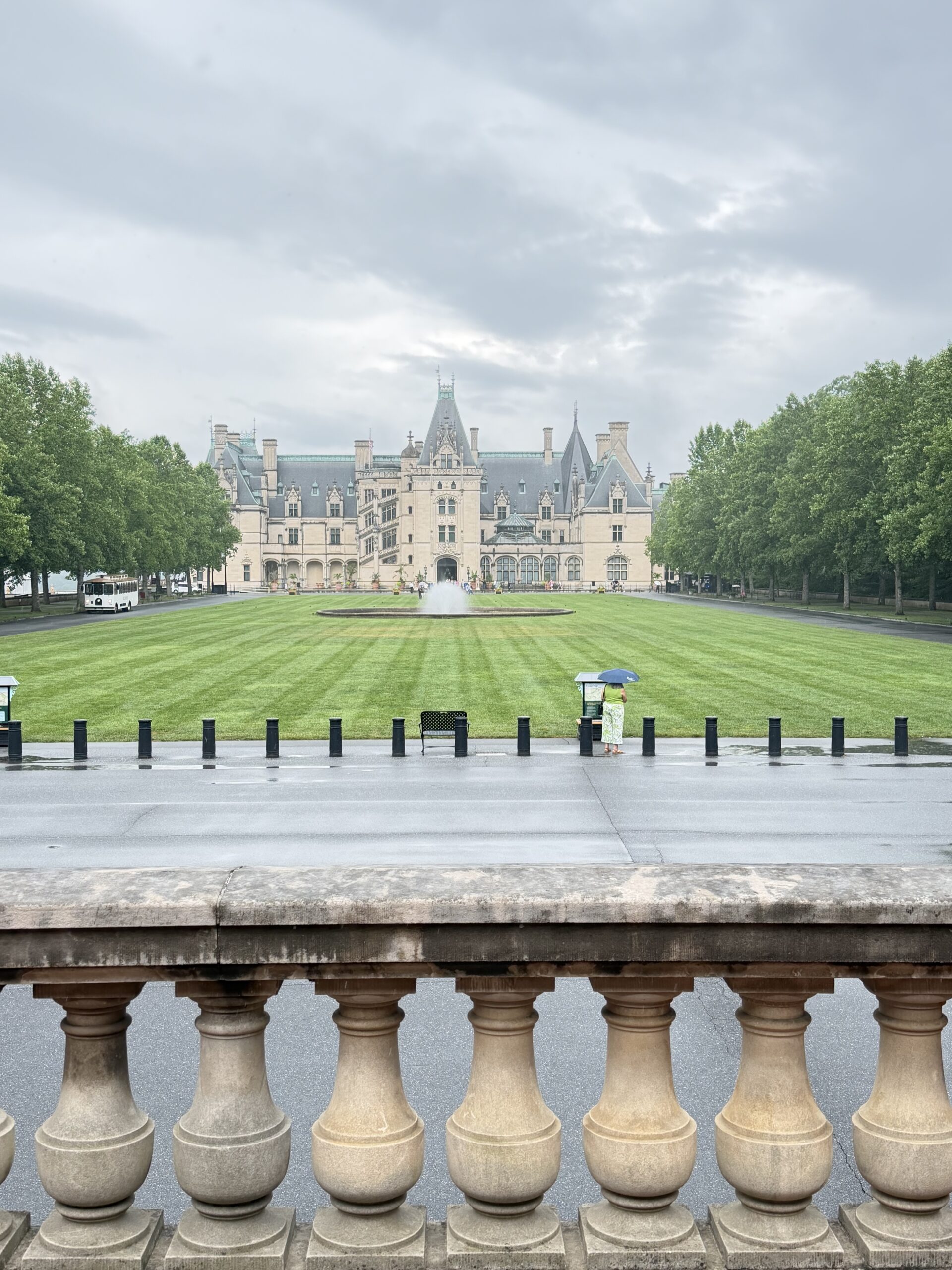
Arrive earlier than your Biltmore House reservation time. Your ticket time is just for house entry — you’re welcome on the grounds all day. Check current hours of operation before you go, since they shift by season. We used the extra time before our slot to walk the esplanade, the long lawn leading up to the house with the fountain at its center. It’s one of the best photo spots on the property, and it’s completely free.
Biltmore is genuinely huge, and North Carolina mountain weather shifts fast. Our morning started under solid gray clouds. By afternoon at the winery, we were in full sun. Pack layers and a light rain jacket regardless of the forecast. If you’re building this into a longer western North Carolina trip, check out our Hendersonville NC day trip guide. It covers a town about 25 minutes away that pairs well with a Biltmore day.

Inside the house: the grand rooms
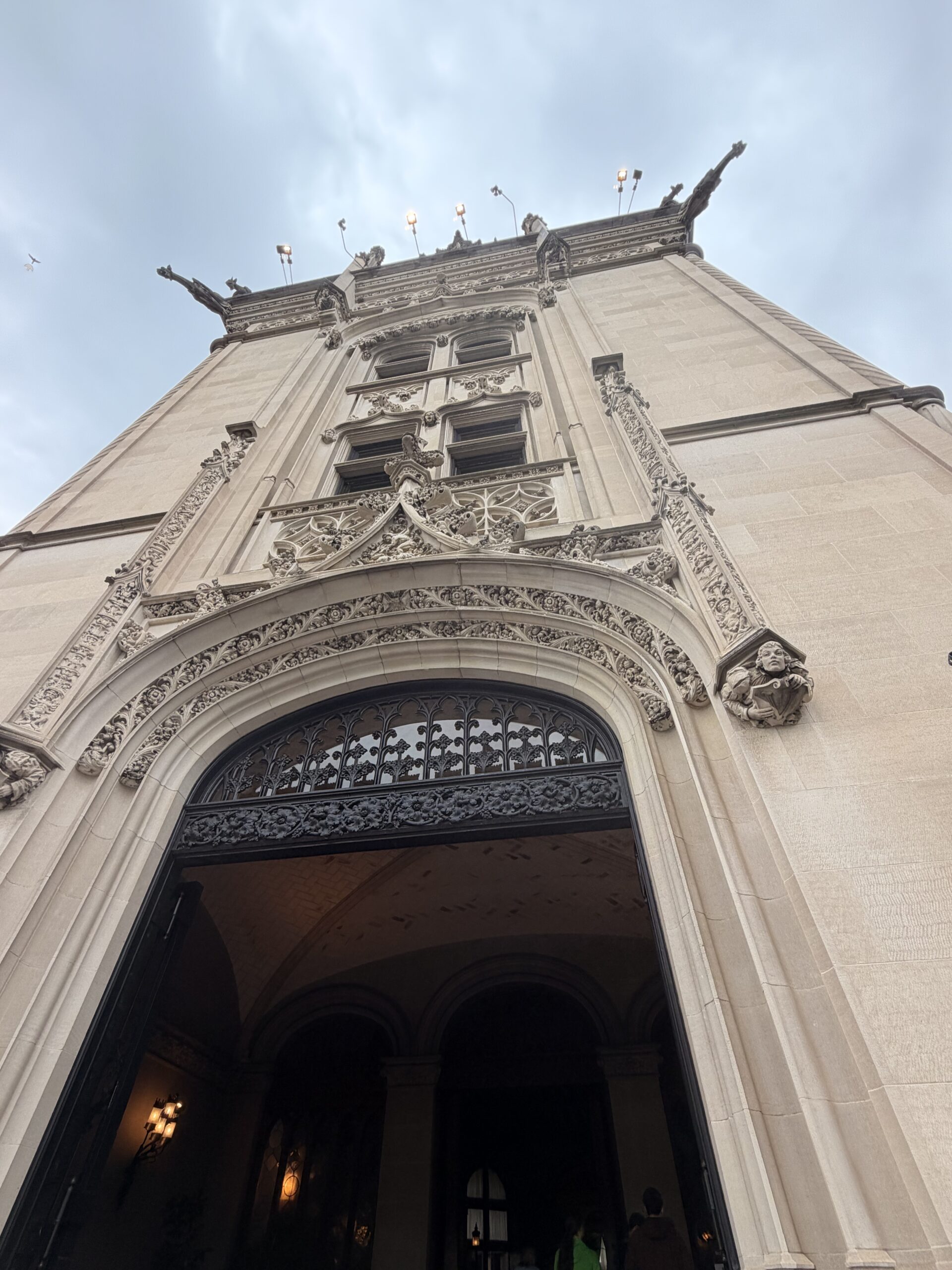
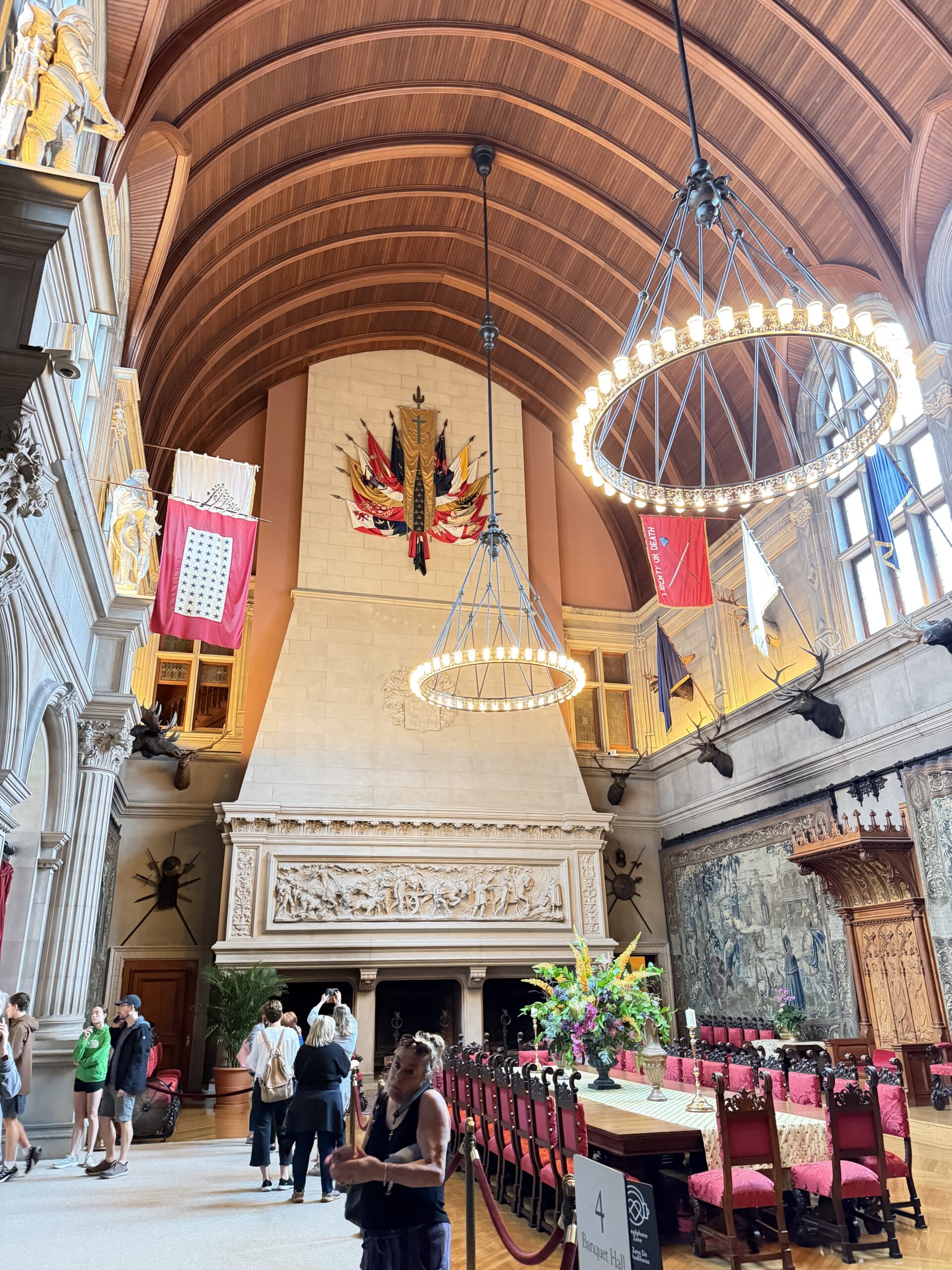
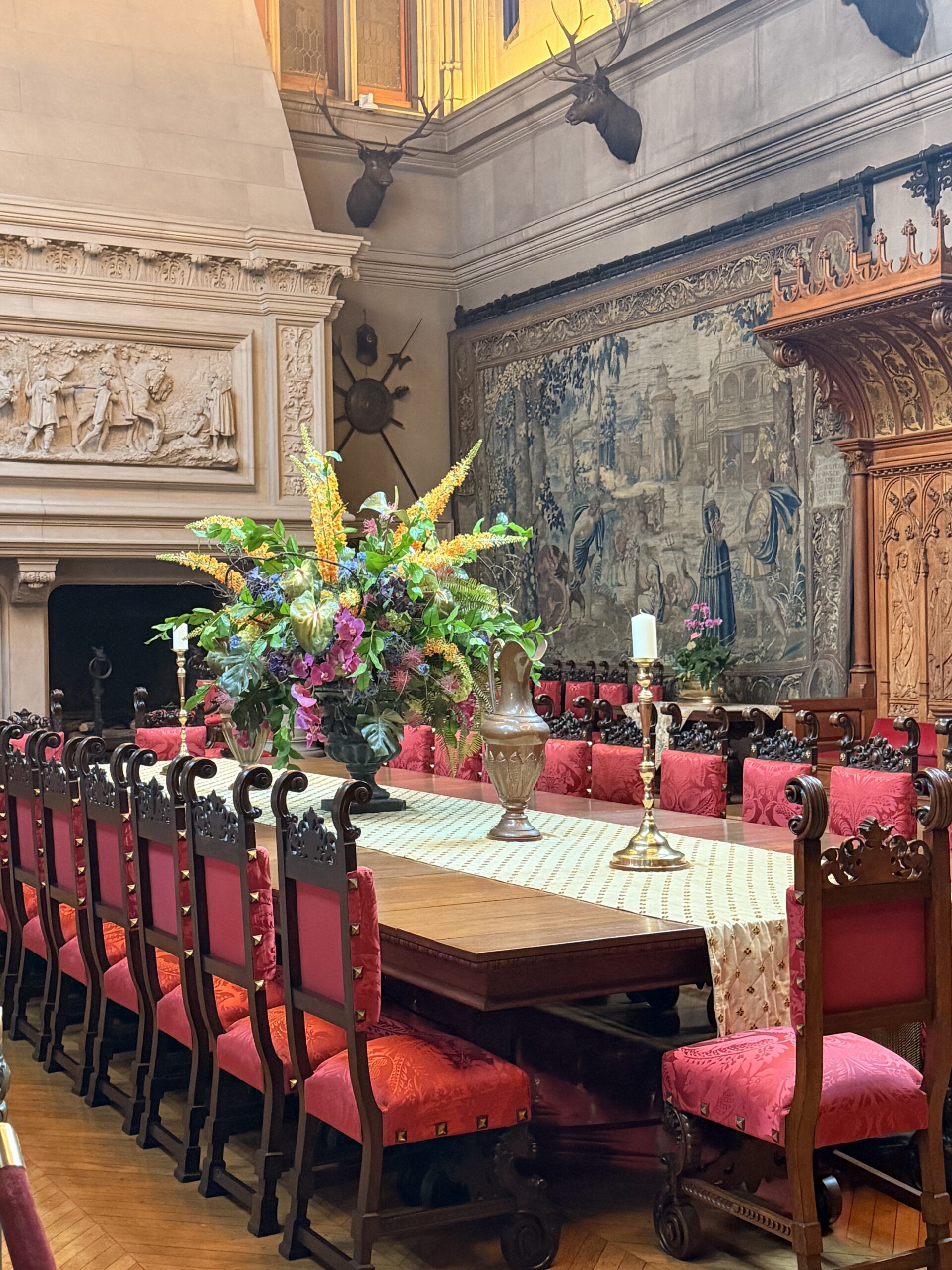
The self-guided route starts on the ground floor, in the rooms built for entertaining. This is where the scale of the place actually lands. The Banquet Hall has a seven-story-equivalent barrel ceiling and a triple fireplace. Its table seats 64 — it’s the room that makes you understand why this house took six years to build.
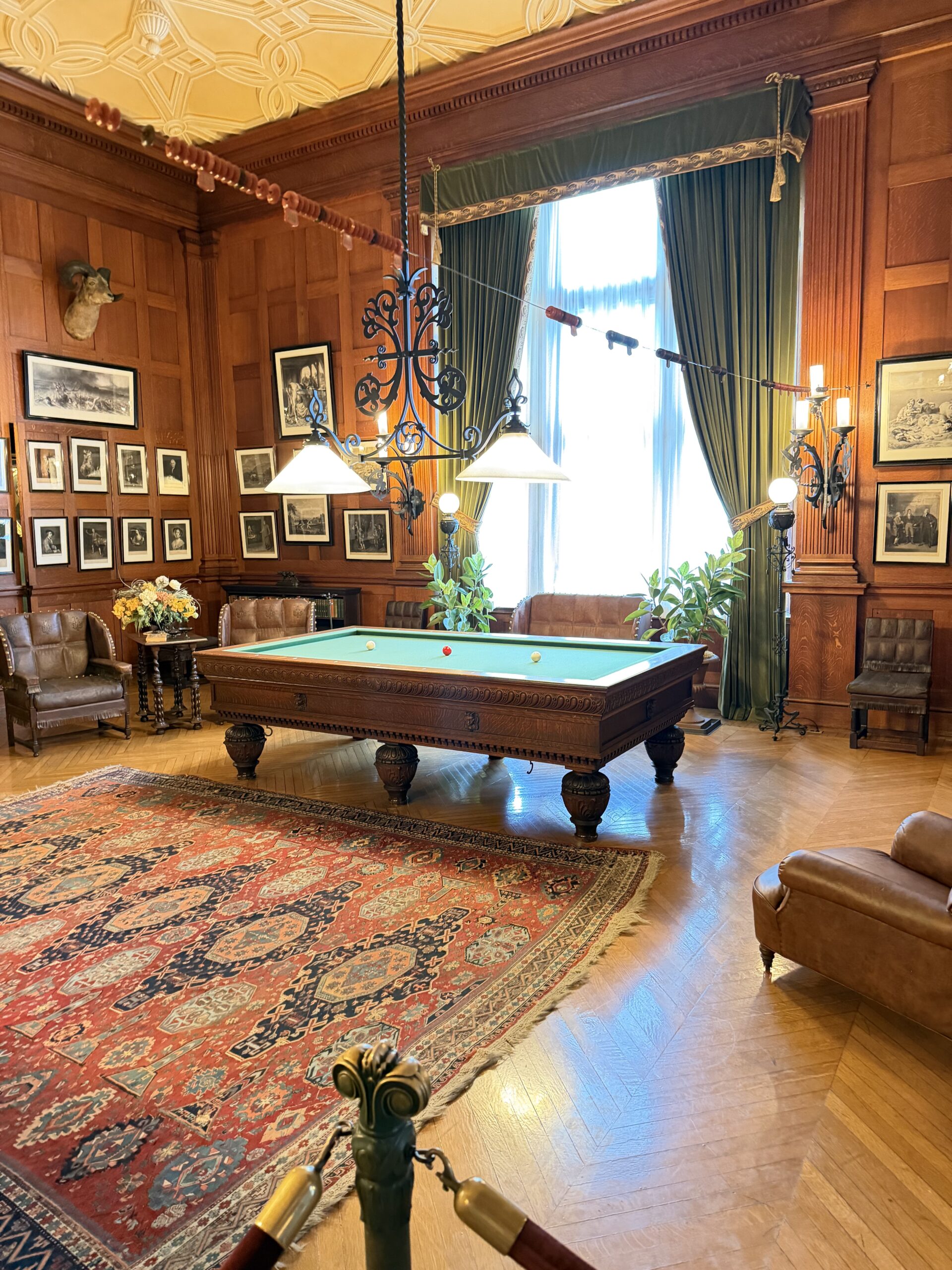
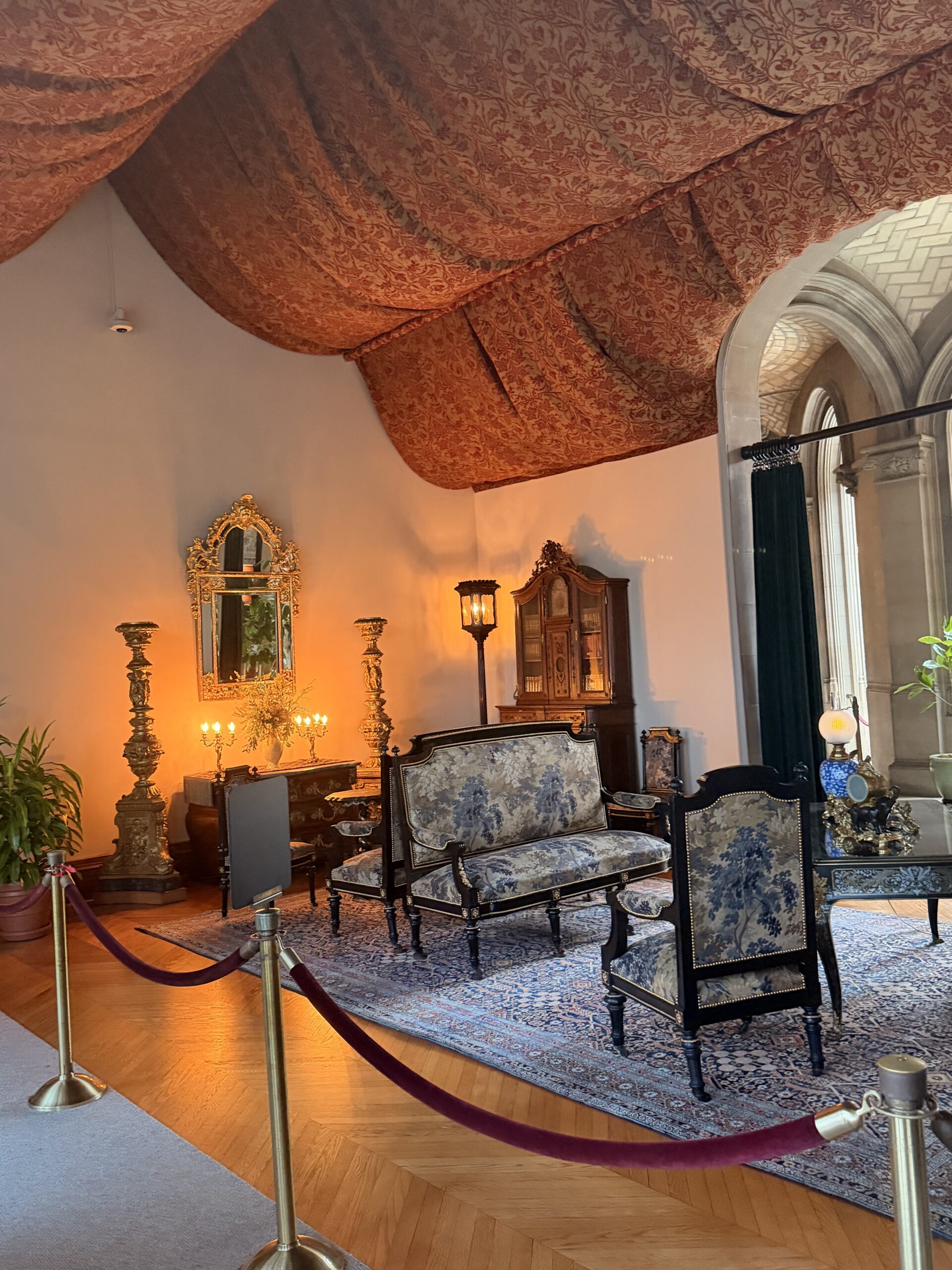
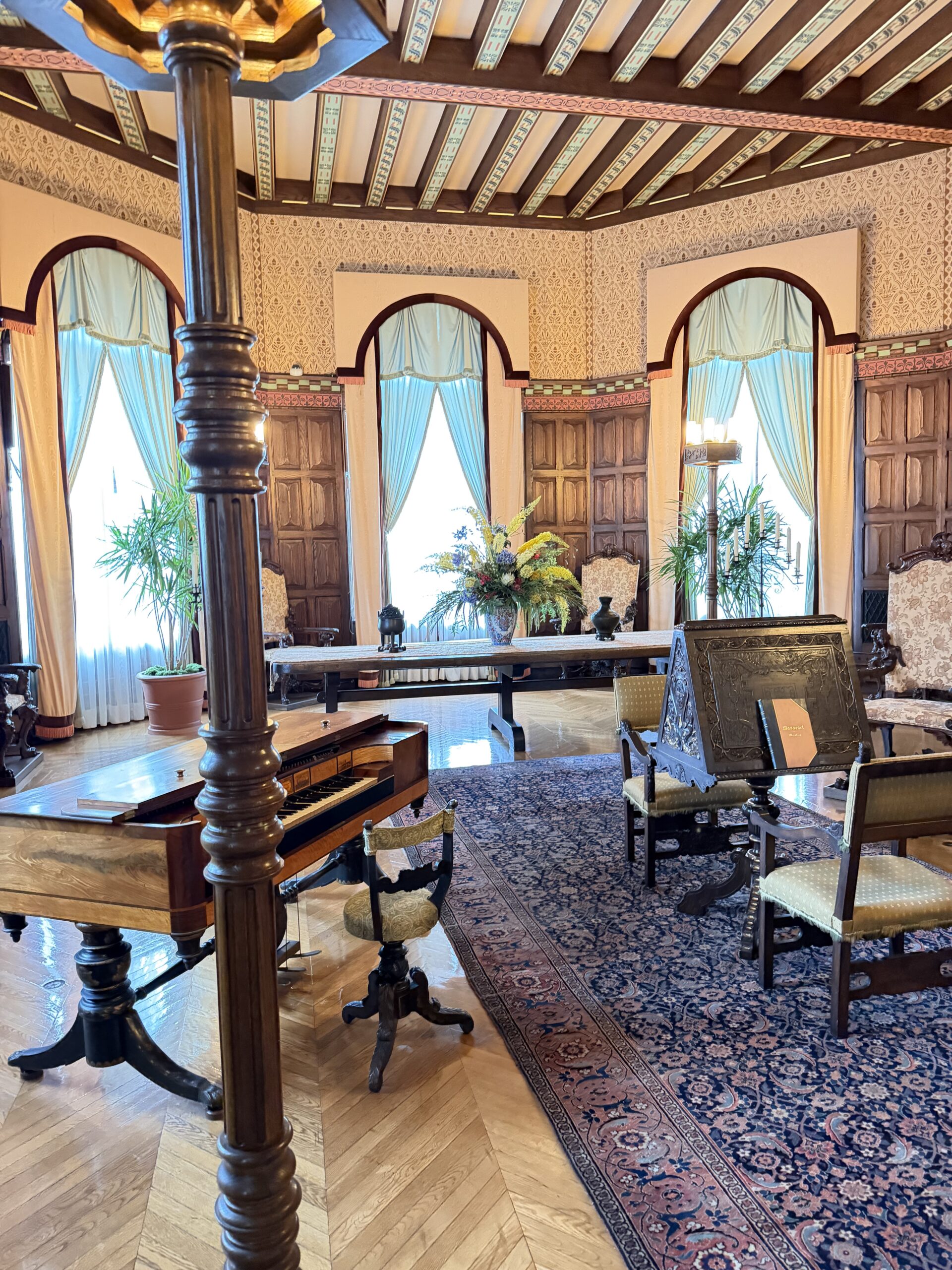
From there, the route moves through the Billiard Room, the Salon, and the Music Room. Each is packed with antiques that are still original to the house, not reproductions.
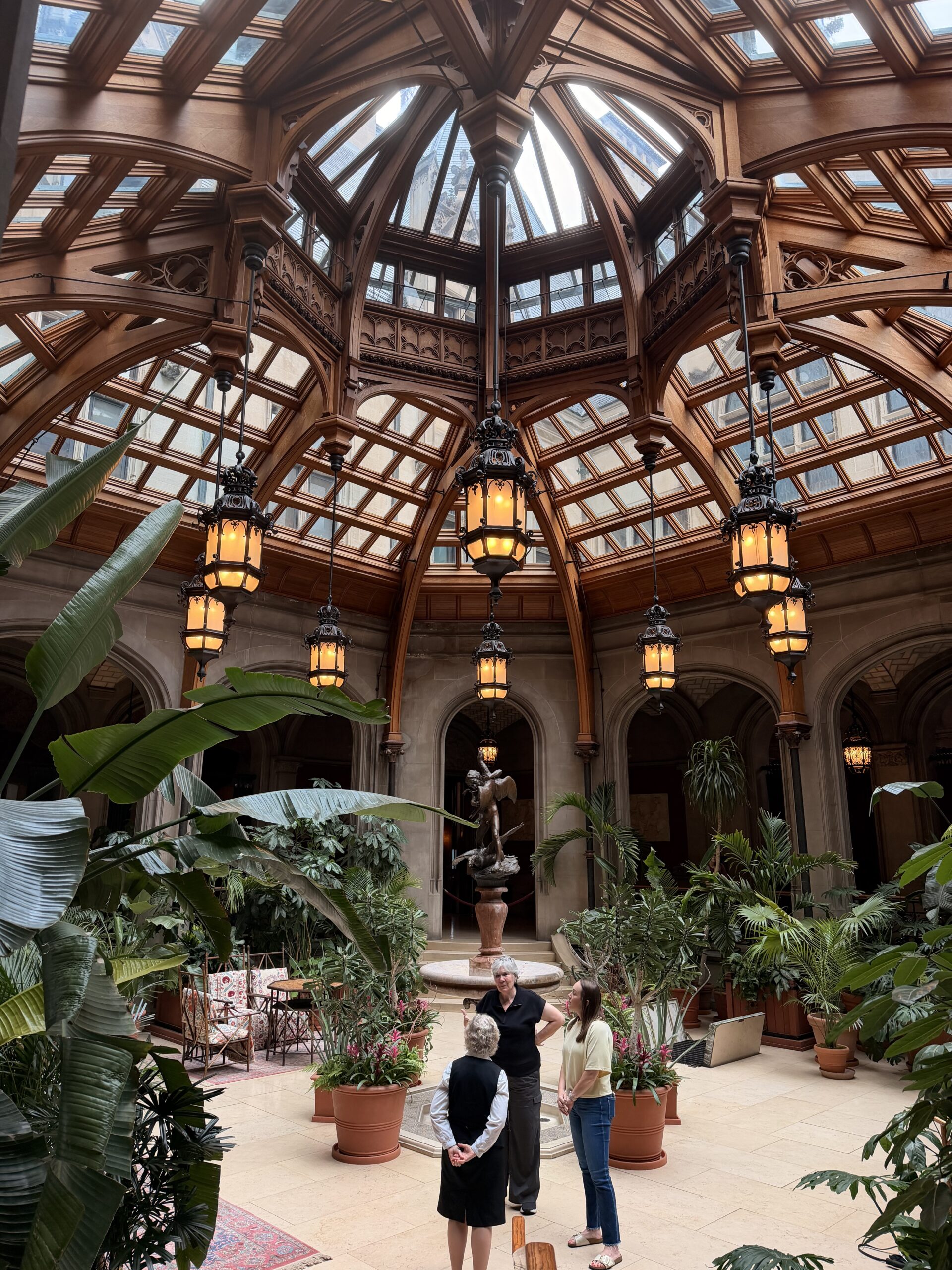
Don’t rush past the Winter Garden in the center of the ground floor. It’s a glass-domed room that served as the Vanderbilts’ actual living plant conservatory. It’s also a nice place to pause before the crowd thickens near the Library.
The Library and Loggia
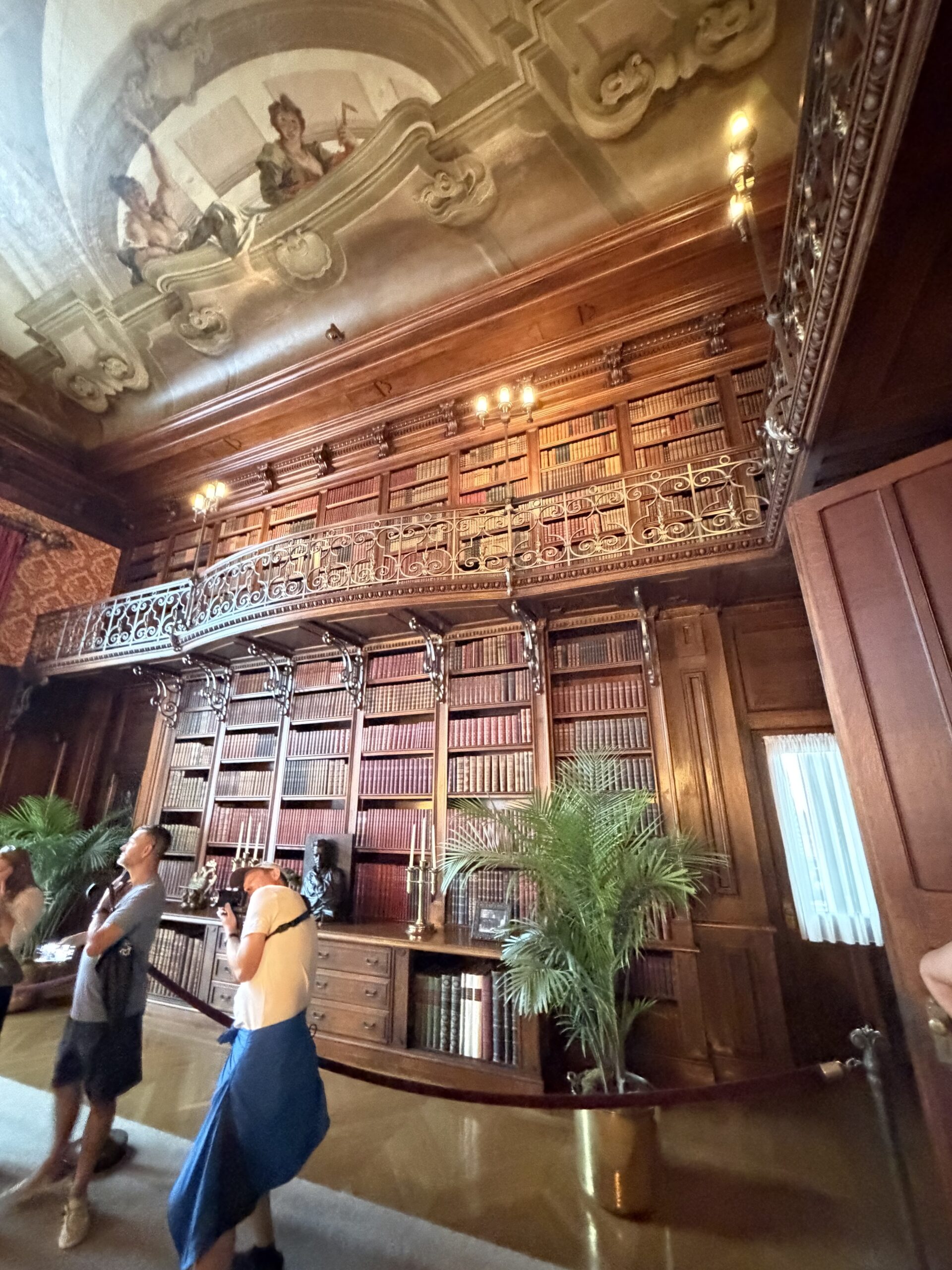
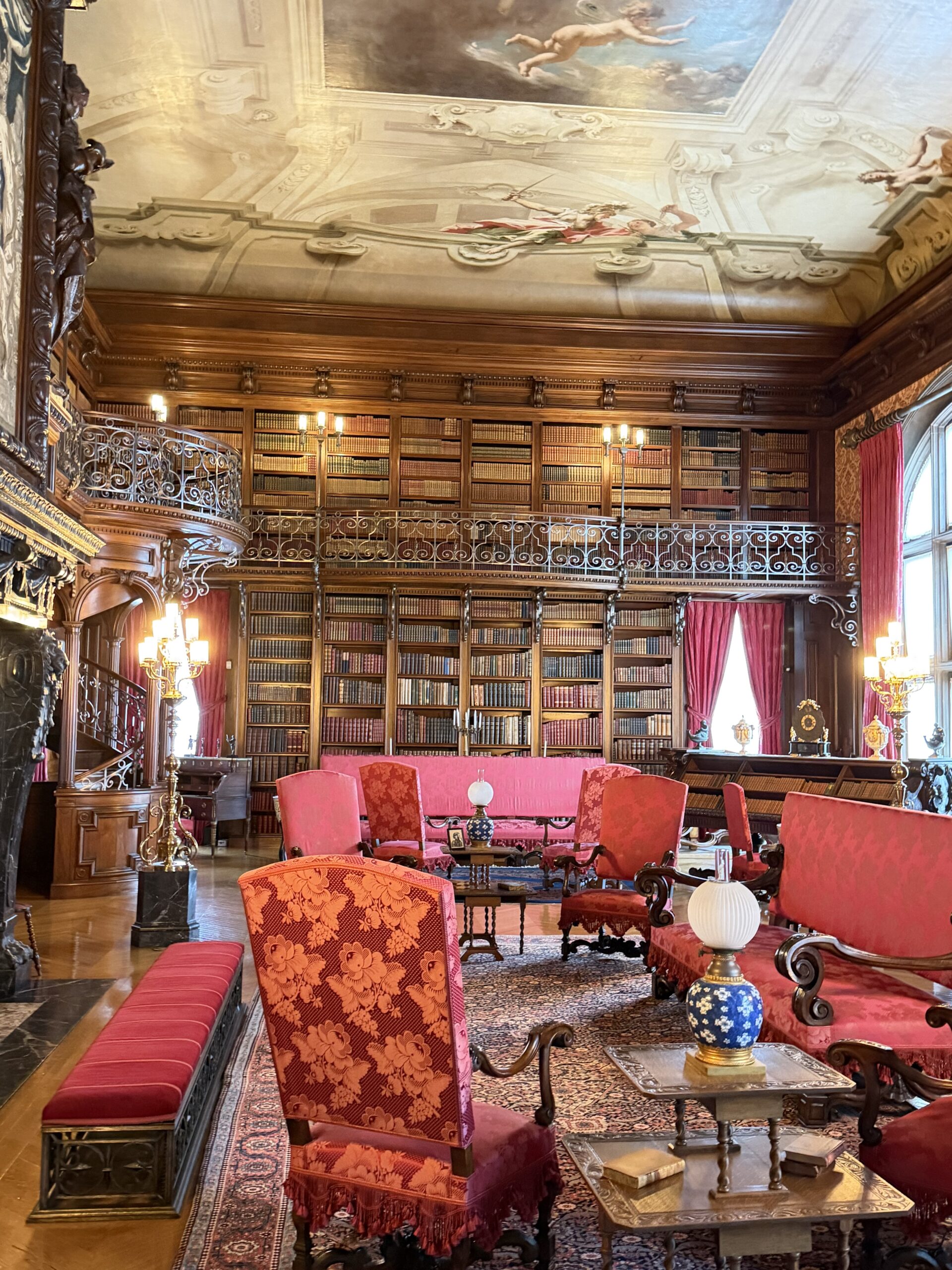
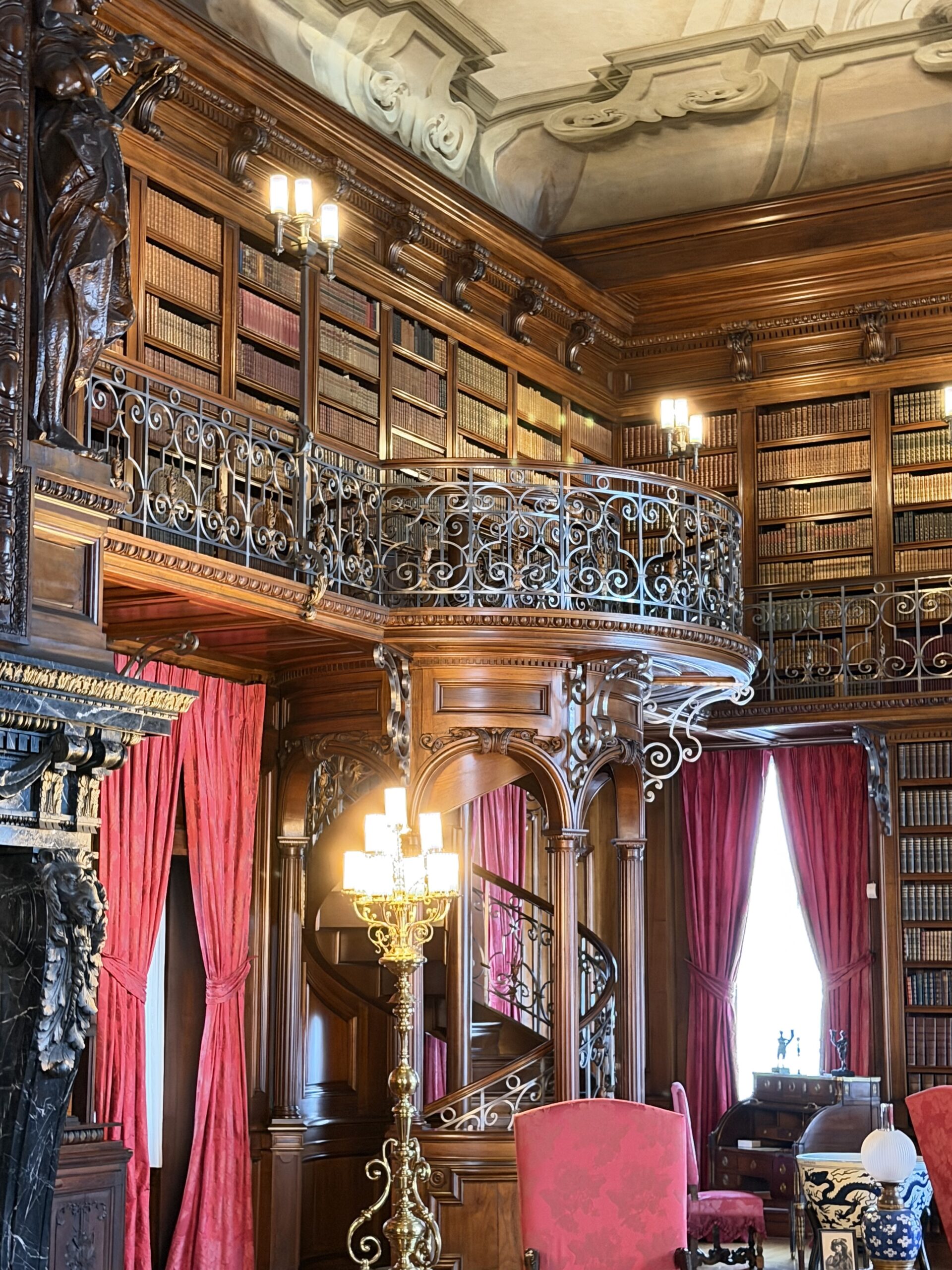
The Library is worth slowing down for on its own. It holds roughly 23,000 volumes across two stories. A hidden spiral staircase behind the shelves connects the two levels — kids spot it before adults do. Look up at the ceiling mural before you move on. It’s an 18th-century Italian painting; the Vanderbilts bought it whole and had it installed.
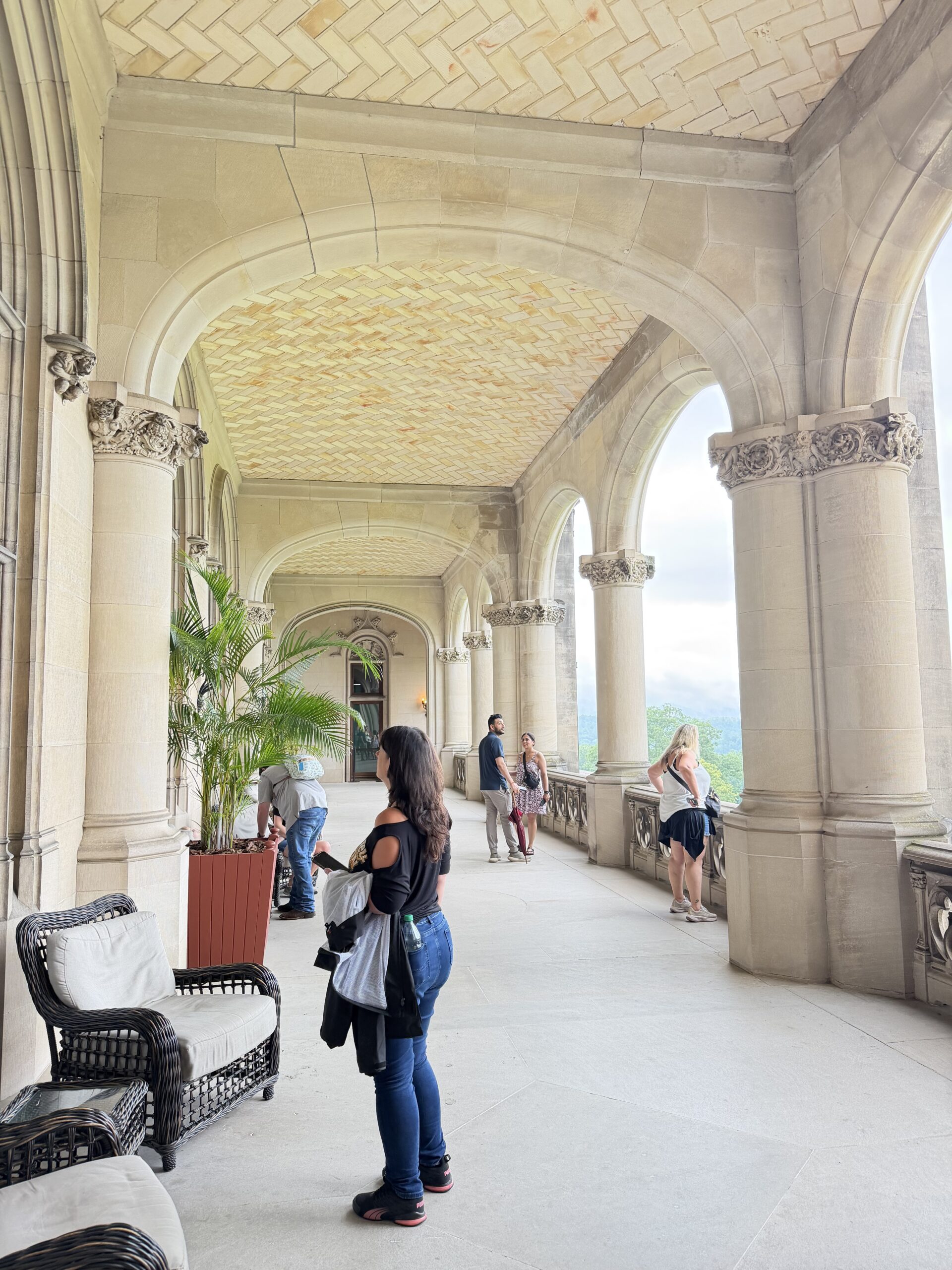
Step out onto the Loggia if the weather’s decent. It’s a covered, arched porch on the back of the house, looking straight out at the Blue Ridge Mountains. It’s free, it’s uncrowded, and the view beats half the paid overlooks in Asheville.
The staircase and upstairs bedrooms
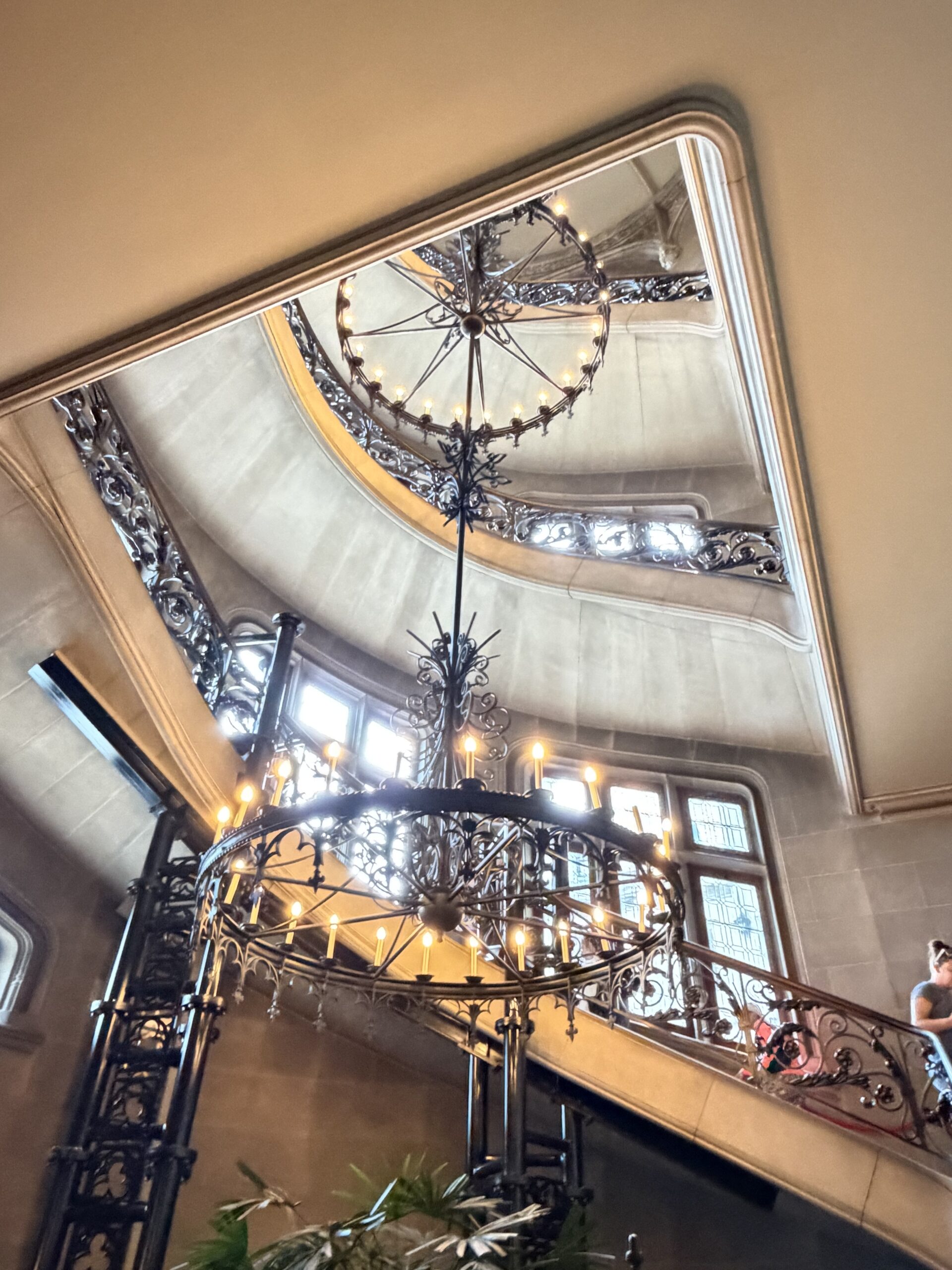
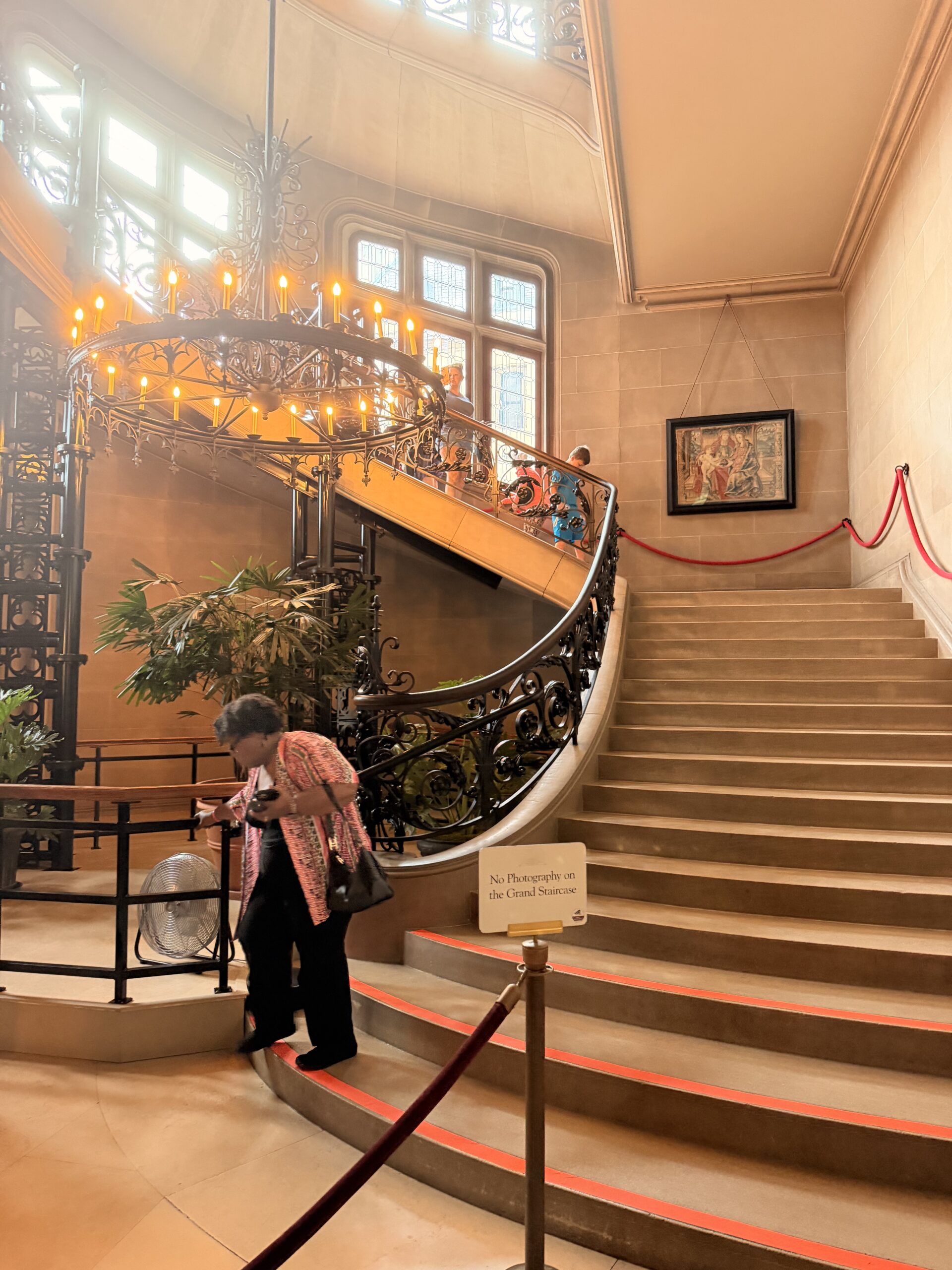
The four-story spiral staircase is the house’s signature shot. A wrought-iron chandelier drops through the center of the stairwell from the skylight above. Biltmore allows photography with phones and small cameras — no flash, no big lenses, no tripods — throughout the self-guided route, so get the shot looking straight up.
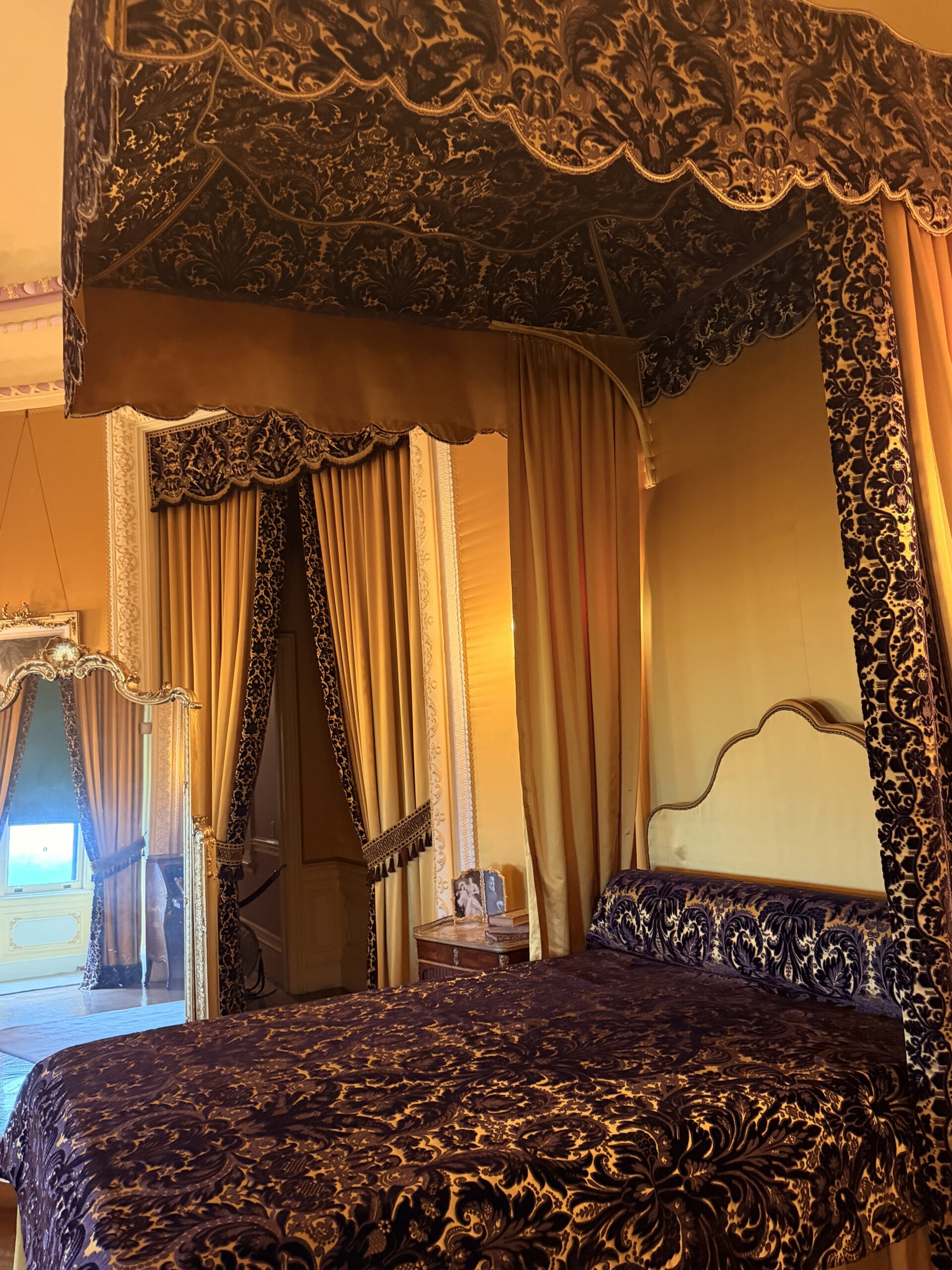
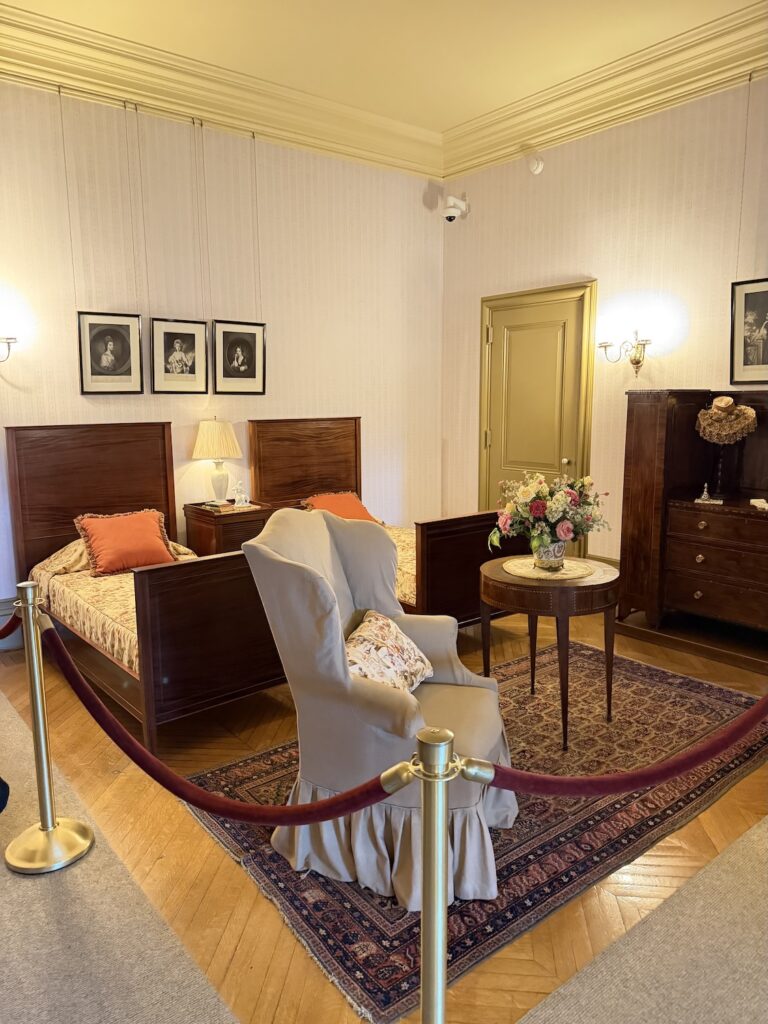
Upstairs, the bedrooms feel less like a museum and more like a home people actually lived in. The guest rooms — gold damask, heavy canopy beds — housed visiting family. One room holds a family portrait of a later generation of Vanderbilts. It’s a nice reminder: this wasn’t just a historic house. People kept using it as recently as a few decades ago.

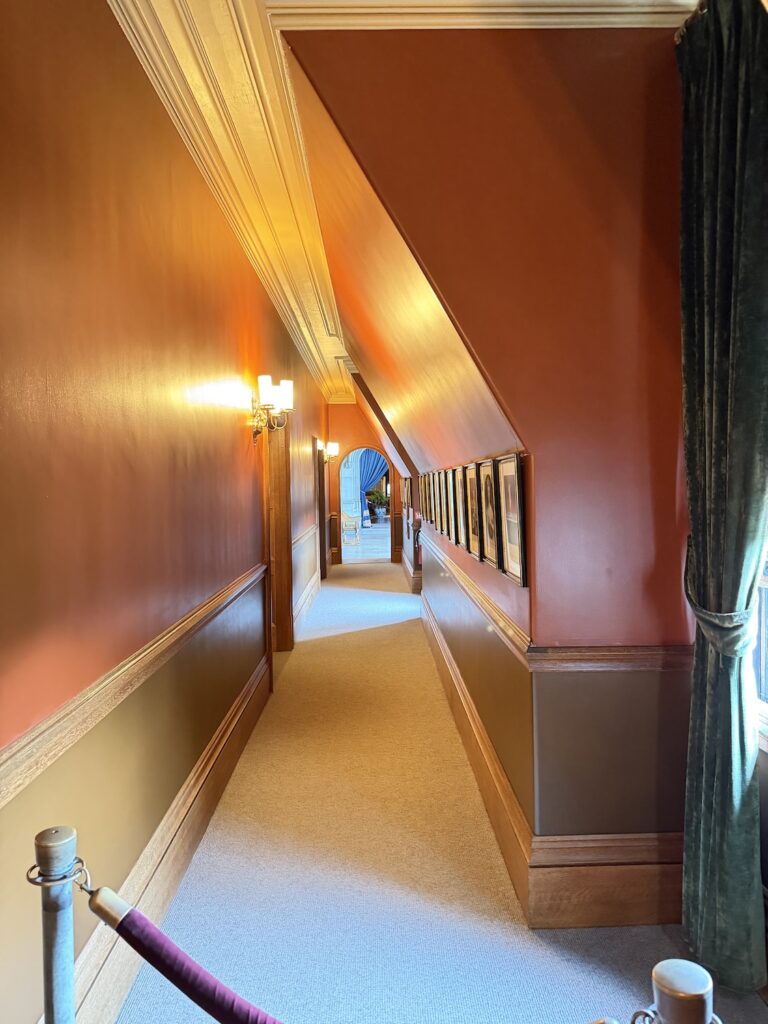
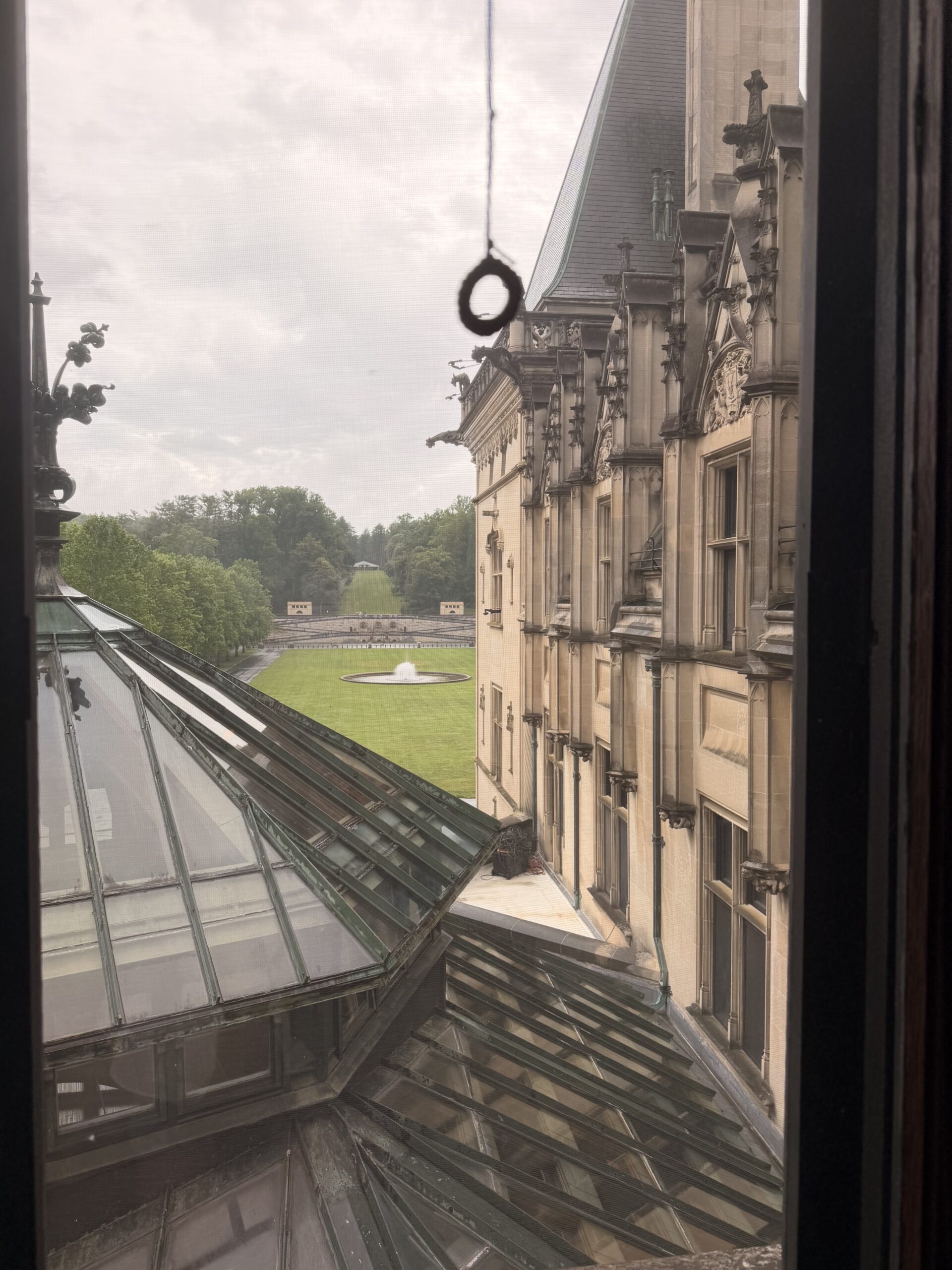
If your ticket and energy allow it, walk up to the attic level. It’s less crowded than the main floors. A window along the corridor gives you a rooftop-level view down onto the lawn and fountain you walked in on. It’s one of the better vantage points in the whole house, and most visitors skip it because they’re tired by that point.
The basement: where the budget-minded story really is
If you only have energy for one section beyond the grand rooms, make it the basement. This is where Biltmore stops being about wealth on display. It starts being about how a self-sufficient estate actually ran — and it’s consistently the least crowded part of the tour.
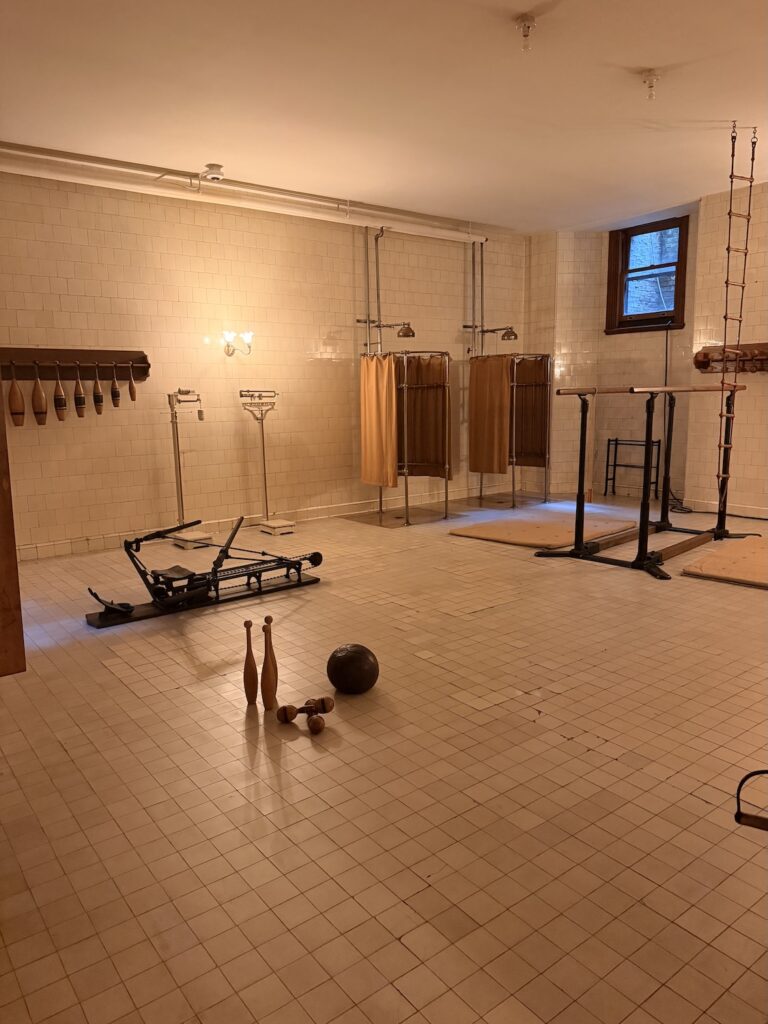
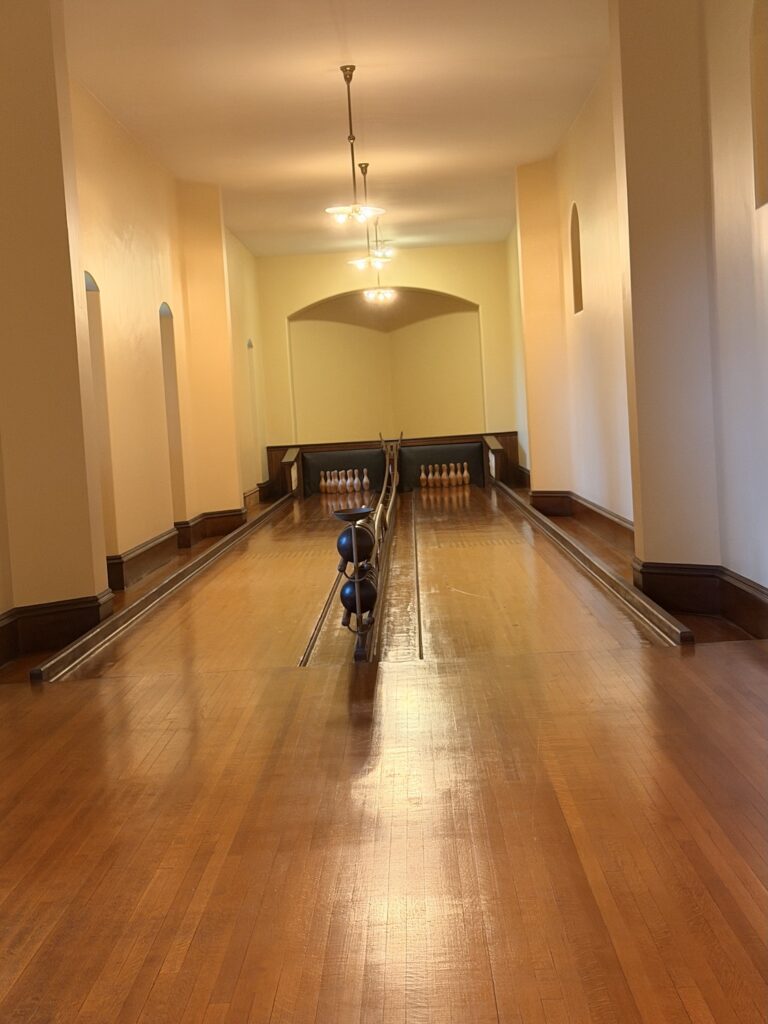
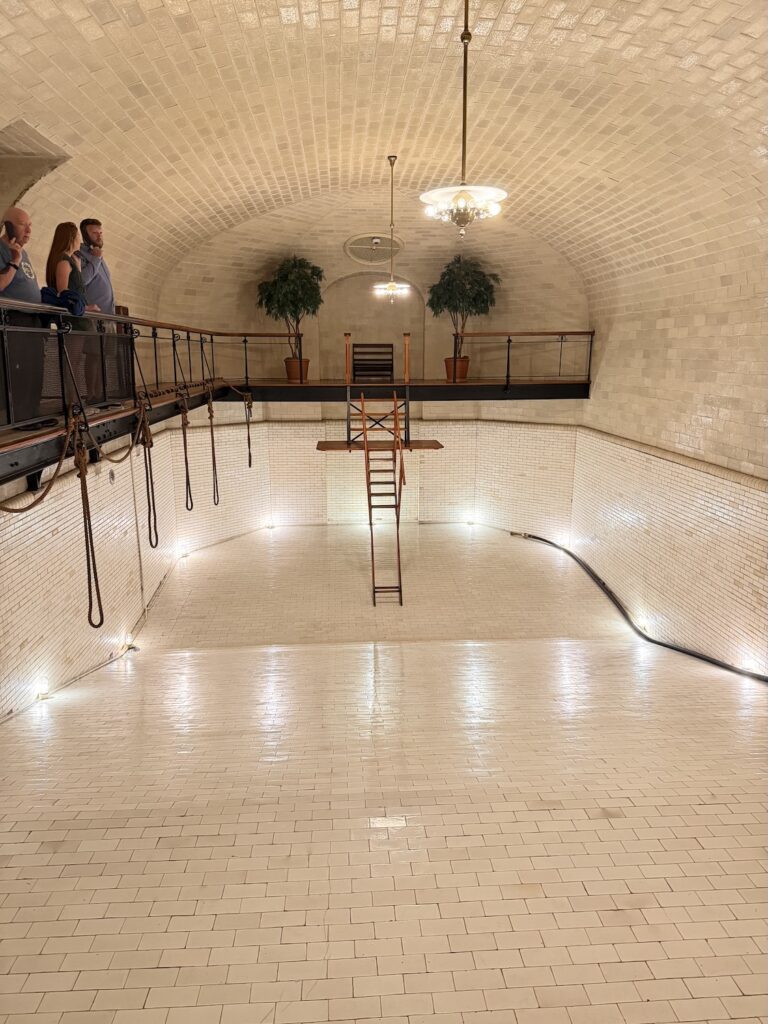
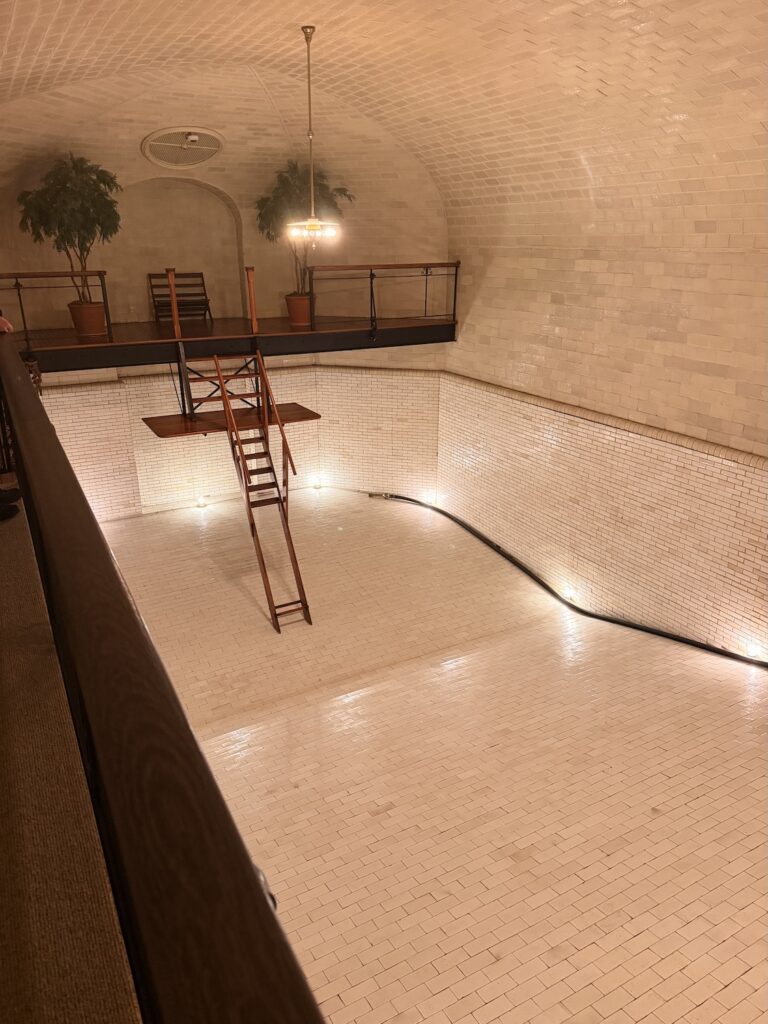
The indoor swimming pool and the bowling alley down here rank among the first installed in a private American residence. The pool had no filtration system, so staff drained and refilled it by hand. Kids find that detail more interesting than half the paintings upstairs. Next to it sits the old gymnasium, still fitted with early rowing and exercise machines.
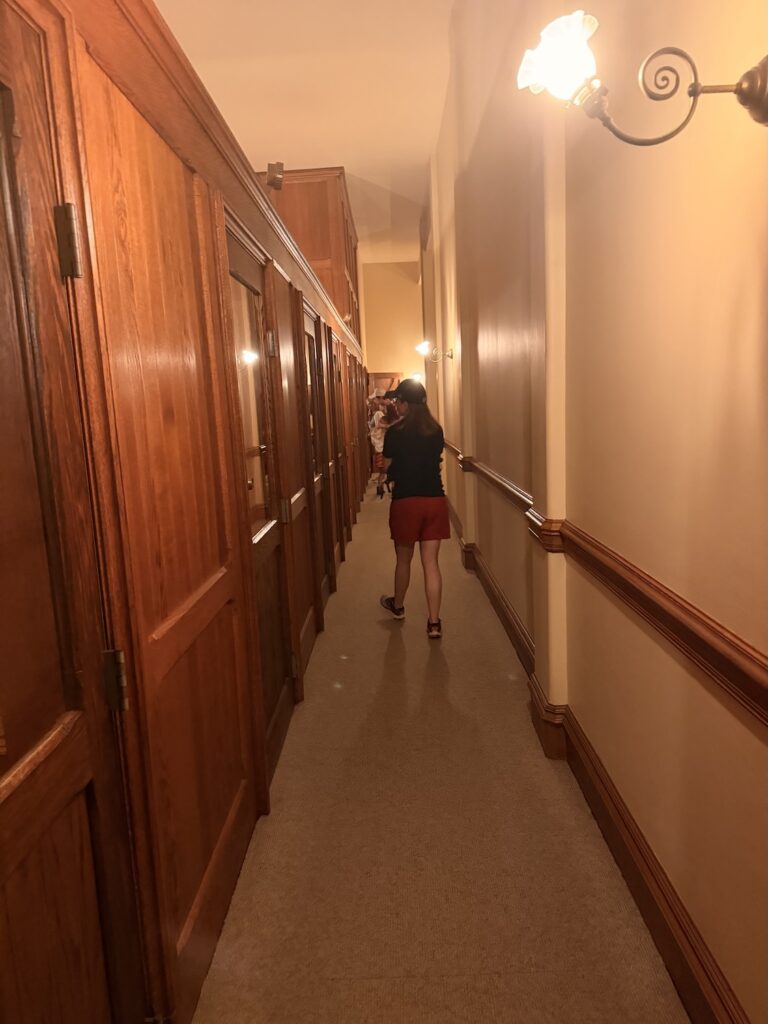
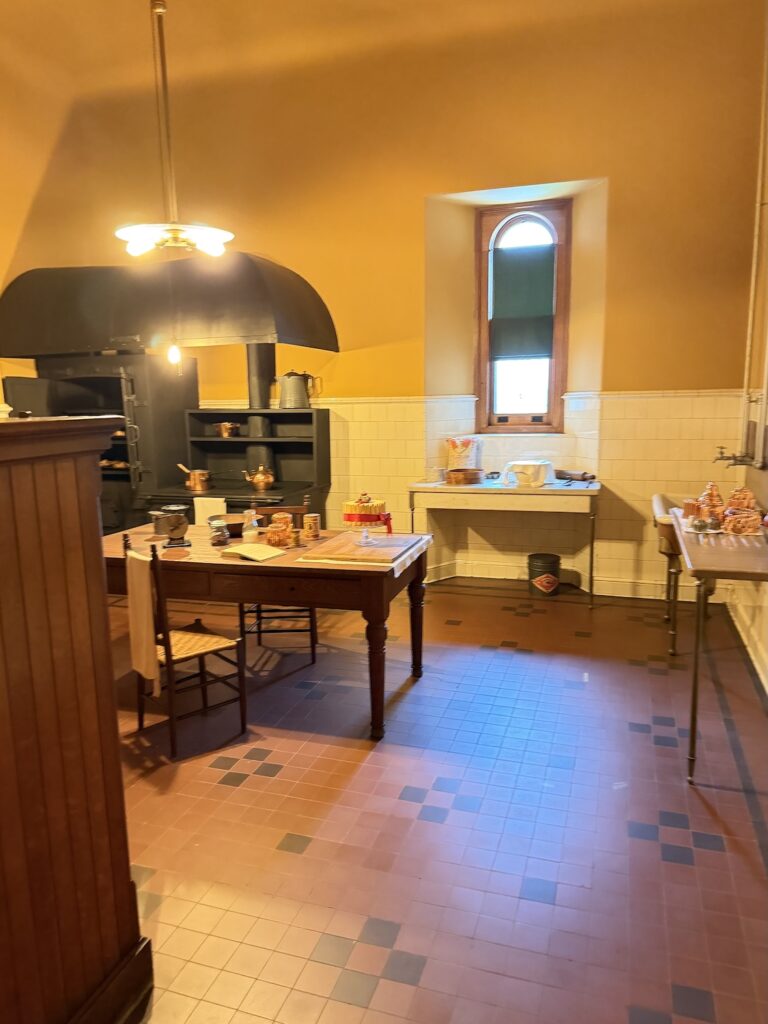
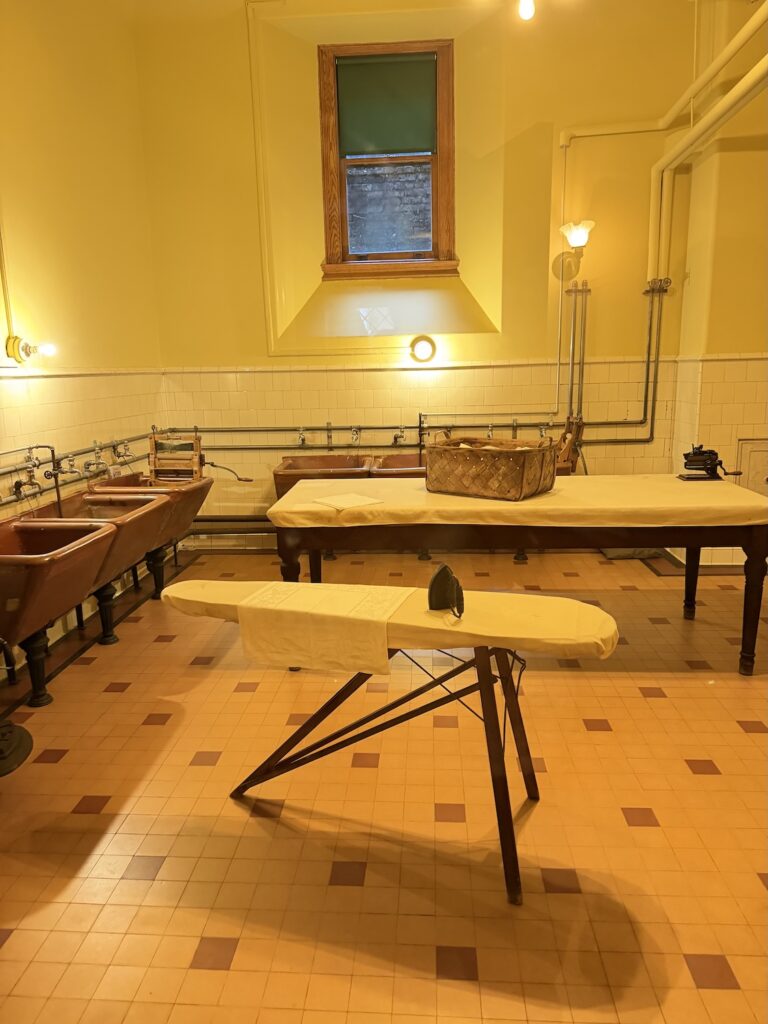
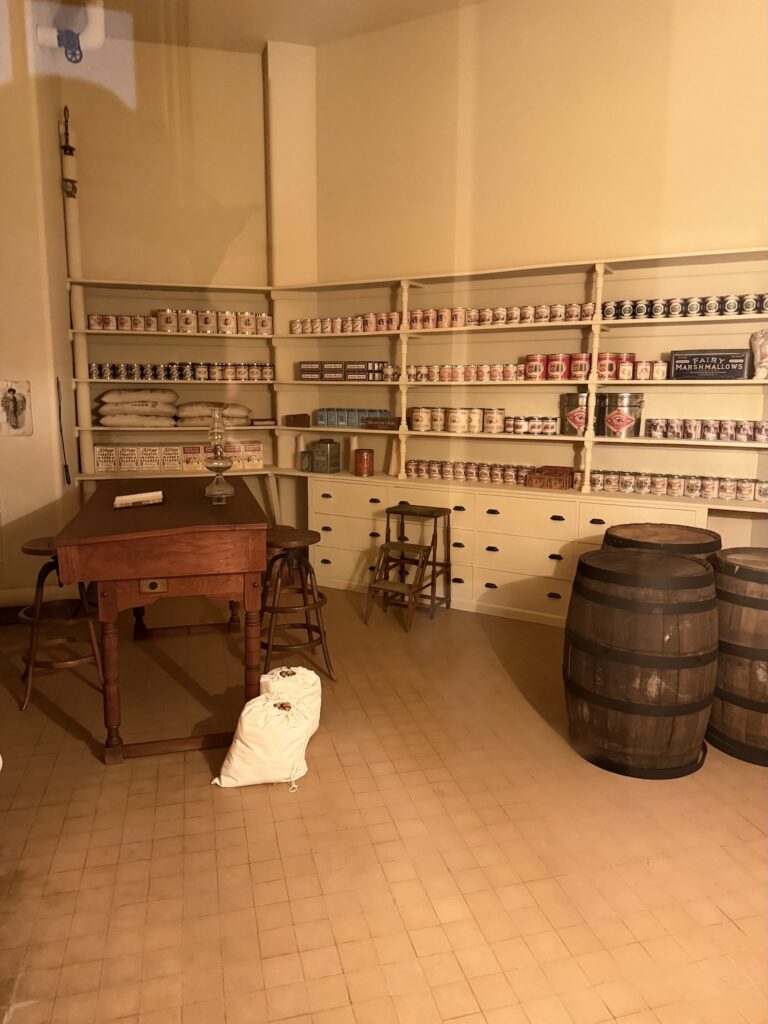
Keep going and you hit the working end of the house. You’ll find the kitchens and bakery ovens, a laundry room lined with sinks and mangle presses, and a pantry stacked with canned goods. Together they show exactly how a house this size fed itself without a grocery run. The servants’ corridor running underneath it all is a plain, narrow, brick hallway. It’s a deliberate contrast to the gilded rooms upstairs, and it’s the part of the tour that actually explains how the house functioned day to day.
Gardens and grounds
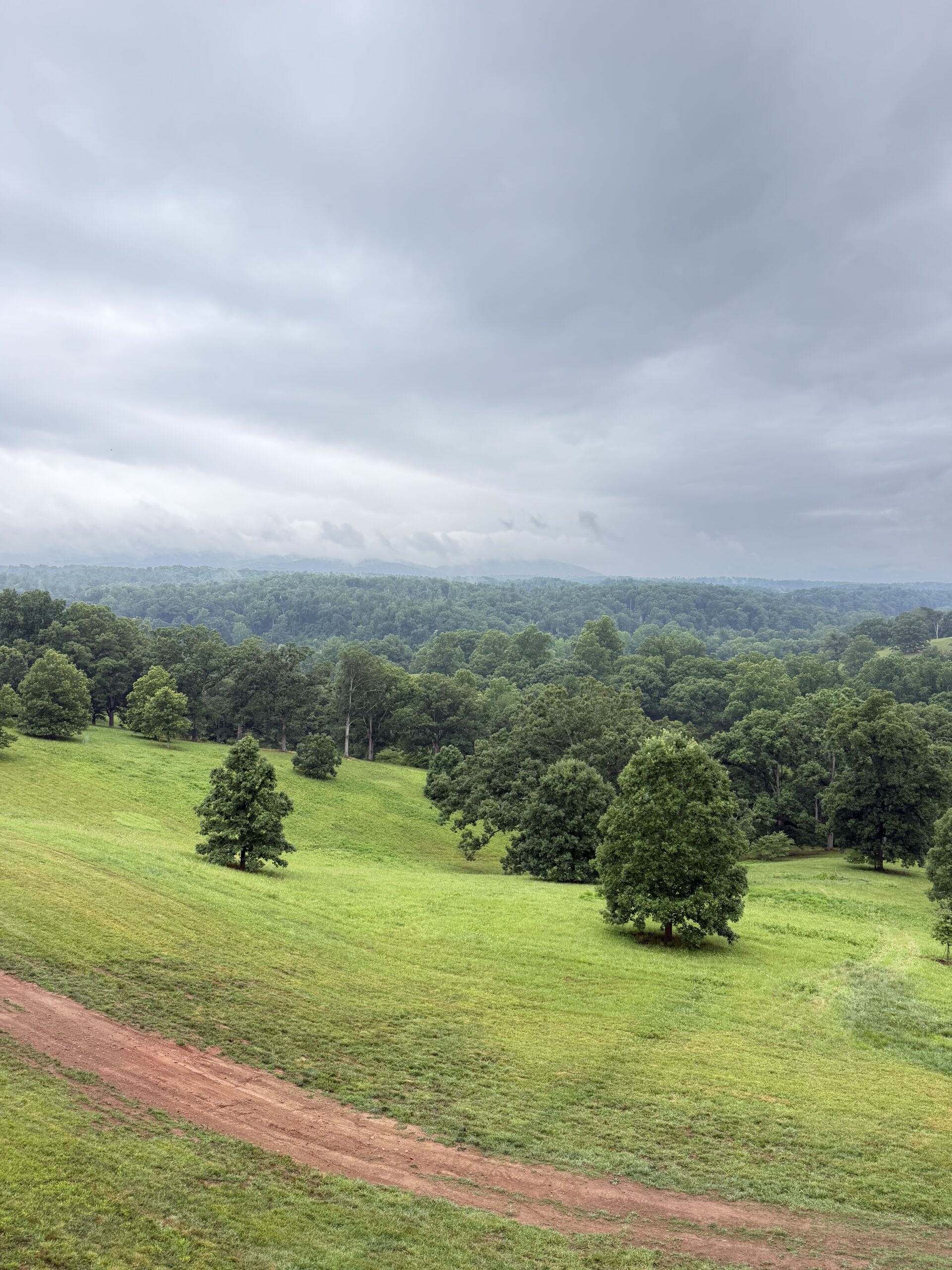
Your ticket includes all 8,000 acres. Frederick Law Olmsted — the same designer behind Central Park — landscaped the walled garden and surrounding grounds. Even a 20-minute walk through the flower beds near the house is worth it before you head to the winery. This part of your admission costs nothing extra, and most people skip it entirely in favor of the gift shop.

If landscaped gardens are your thing beyond Biltmore, we also walked through Longwood Gardens in Pennsylvania. It’s a different kind of grand estate garden, worth comparing notes on.
Antler Hill Village and the winery
People often forget a standard ticket includes this part of the property. Antler Hill Village has a farmyard, a bike barn, shops, and a green lawn where you can sit for a while if the house has worn everyone out. It’s a short shuttle ride or a walk from the main house, and it’s free with any admission — no upcharge.
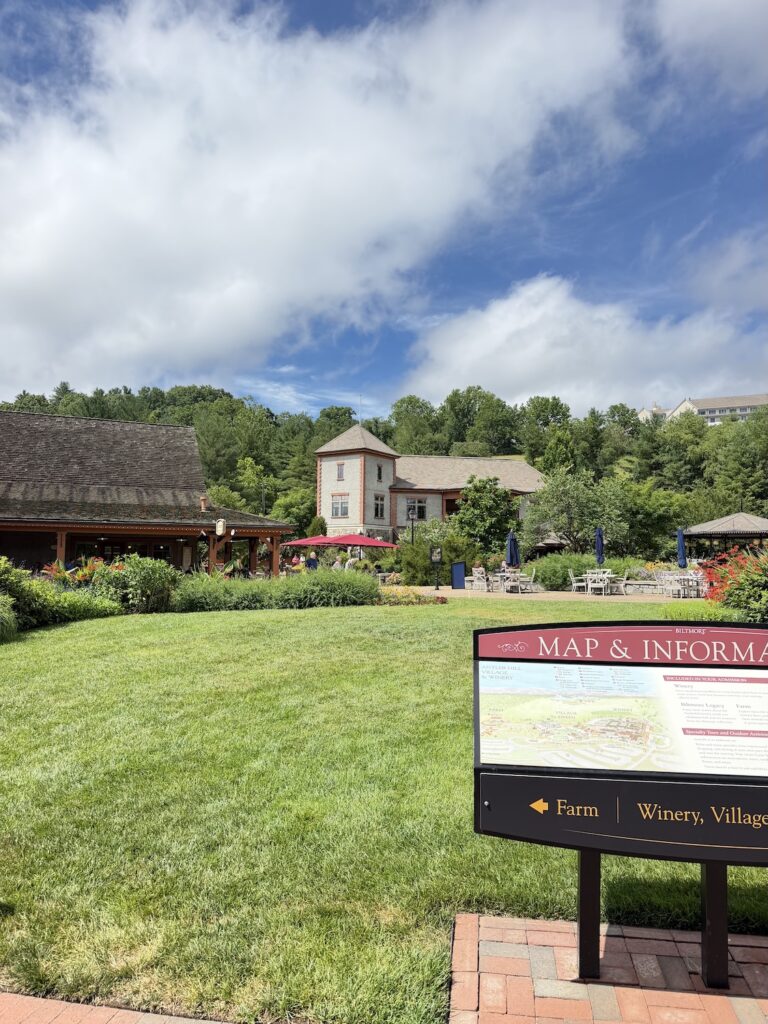
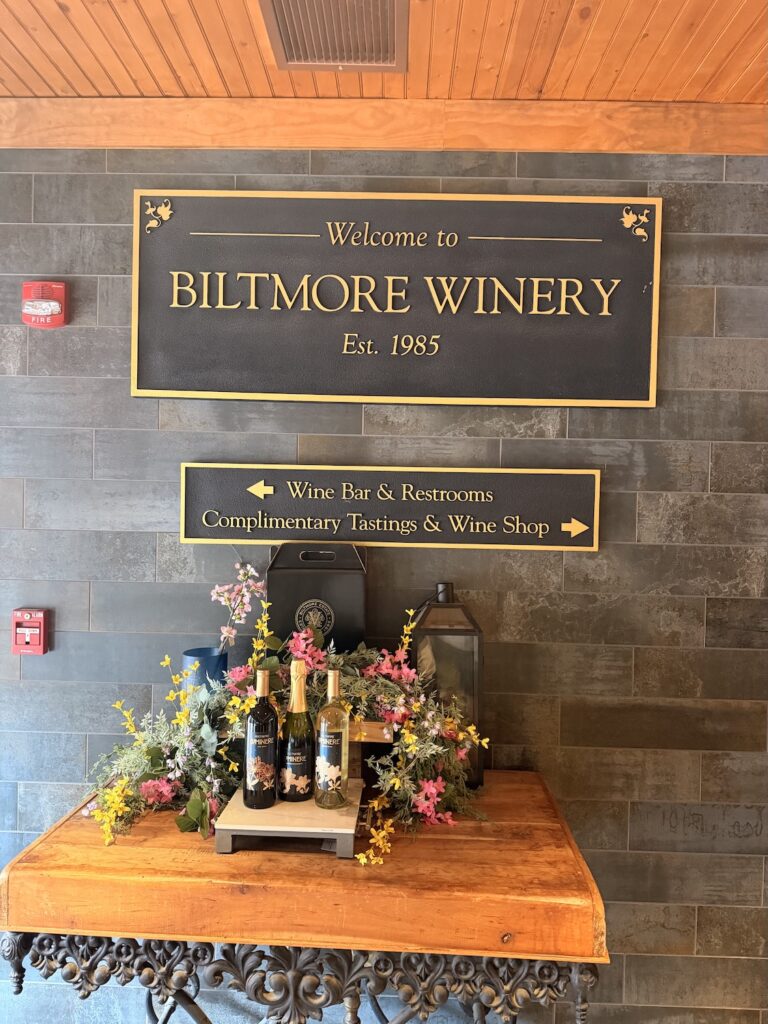
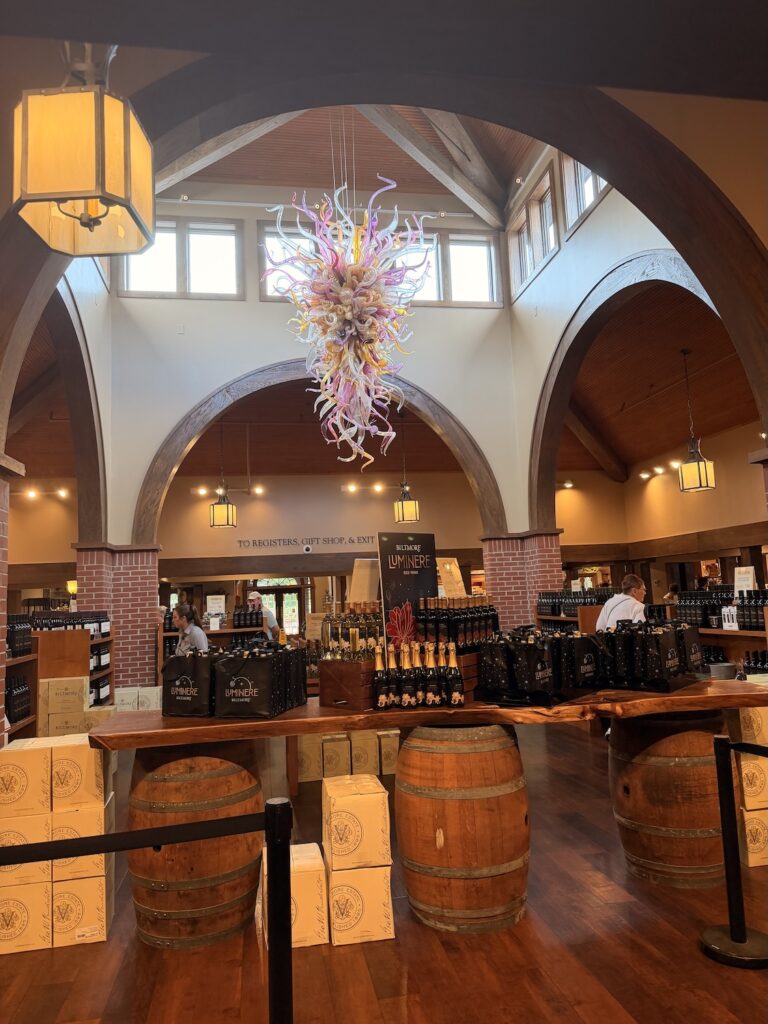
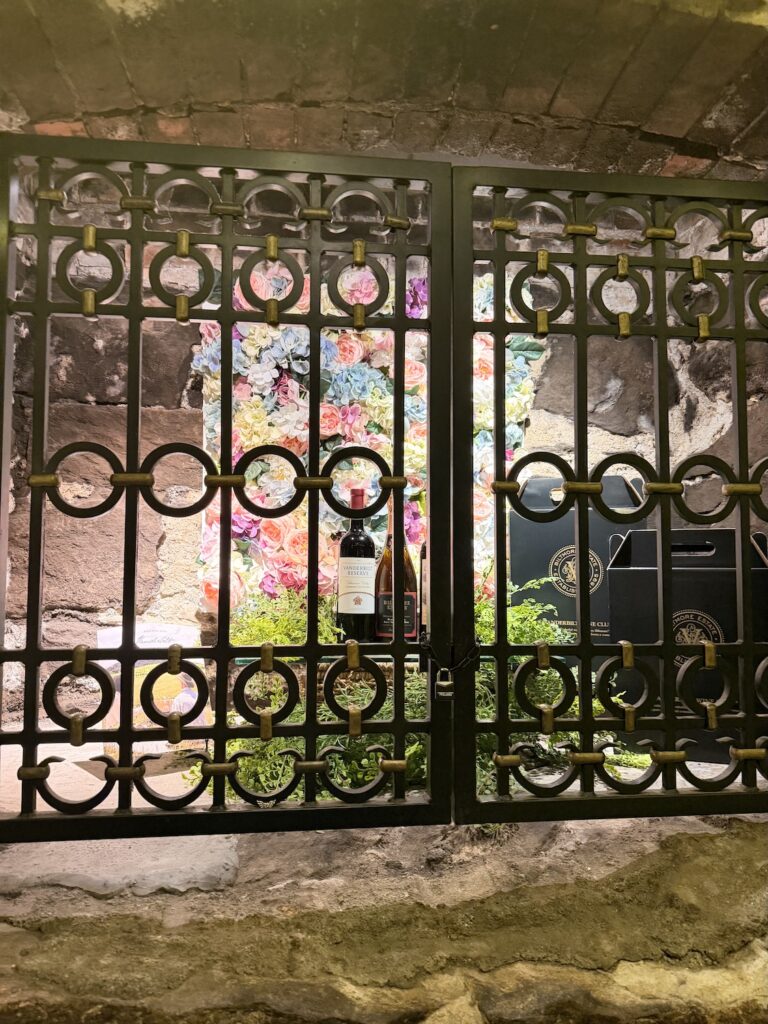
The winery is the actual can’t-skip stop. Every ticket includes a complimentary wine tasting — no separate fee, no reservation needed beyond walking in. The tasting room and wine shop sit inside a stone building older than most other regional wineries. It’s a relaxed way to end a day that started with a five-mile approach drive and 55 rooms of house. If you want another western North Carolina evening out after your Biltmore day, Honeysuckle Holler in Hendersonville is a fun, low-cost follow-up.
What to actually pack
Wear shoes built for a full day of hardwood floors, basement stone corridors, and gravel garden paths — this is not a heels-and-sandals day. Bring a refillable water bottle. Stations around the property let you skip buying bottled water at estate prices. And build in real time. Between the house, basement, gardens, and Antler Hill Village, expect a six-to-eight-hour day if you’re not rushing. Don’t stack anything else onto your Biltmore day. If you want help mapping the rest of the weekend, our post on planning a getaway efficiently walks through how we build a loose itinerary without over-scheduling.
Worth it, and doable on a real budget
Biltmore has a reputation as a splurge destination. But the actual ticket structure works in your favor if you plan around it. Buy online. Bring anyone 16 and under for free through Labor Day. Treat the grounds, winery tasting, and Antler Hill Village as the included value they are, not extras you’re missing. You’ll leave with a full day and a lot fewer receipts than you’d expect.
If you’re mapping out the rest of an Asheville trip, browse our other Weekend Getaways for where to stay nearby without paying resort prices. Or check out our Greenville, SC guide if you’re making a loop through the Carolinas.